Taiwan's Two Faces
As global supply chains and geopolitics reshape competition and pressure, Taiwan stands at the center of opportunity — and on the front line of risk.

Article contents01 / 10
- How can enterprises build sustainable advantage between two opposing forces?
- Taiwan's strategic pivot points: technology, trust, and resilience.
- From semiconductors to systems integration: the next critical decade.
Taiwan's 2025 exports to the United States reached $198.27 billion, up more than 70% year-on-year; the U.S. surpassed China as Taiwan's largest export market for the first time in 26 years [3]. The trade surplus nearly doubled to approximately $157 billion; GDP growth hit 8.6%. Any export-driven economy would celebrate.
But that same year, Taiwan was pushed to the negotiating table and signed a heavy commitment: at least $250 billion in direct U.S. investment plus equal credit guarantees from semiconductors and tech; U.S. Commerce officials even called publicly for moving "40% of Taiwan's semiconductor supply chain" to the United States [8][17]. Beijing coolly called the deal one that would "hollow out Taiwan's economy" for American benefit [10].
Same island, same year, two numbers pointing in opposite directions. To read this contradiction, we must first recognize the magnitude of the relocation Taiwan is caught inside — as both its greatest beneficiary and the one with no way out. This report traces the full picture of that relocation, down to the machine-tool factories in Taichung eating tariffs, and back to one question: what exactly is Taiwan betting on?
Not Decoupling, But Diverging
The word "decoupling" overstates what is actually happening. China's share of U.S. imports has fallen from 22% to 16%, but U.S. imports from China in 2025 still totaled $308 billion — the lowest since 2009 and roughly 40% below the 2018 peak, but hardly zero [1]. The flows have not stopped; they have rerouted. Vietnam absorbed a 38% increase in U.S. import share, with over $36 billion in new electronics FDI flowing in. Mexico's share grew 52% [16]. Neither country decoupled from China — both inserted themselves as processing nodes between Chinese upstream manufacturing and American consumers.
The economics of this restructuring are visible in the price tag. Dual-sourcing — maintaining supply relationships across two geographies instead of one — costs 5–12% more than the optimized single-source model that global supply chains spent two decades building [16]. Analysts call this the "resilience premium": the cost society pays to reduce concentration risk. The WTO documented the aggregate toll: global goods trade contracted 0.2% in 2025, with North American exports falling more than 10% [16].
Companies haven't decoupled — they've moved some eggs from one basket to a "friendlier" basket. And the tab for diversification is being split by the whole world.
Why Taiwan: A Capital Flow from Silicon Valley to Hsinchu
The AI investment supercycle is not evenly distributed across geographies. Amazon, Microsoft, Google, and Meta committed a combined $635–665 billion in capital expenditure for 2026, the majority targeting AI data centers and the chips that fill them [17]. That capital flows to NVIDIA: data center revenue reached $62.3 billion in fiscal 2025, and the data center semiconductor market grew 44% year-on-year in Q2 2025 [7]. And NVIDIA's chips come from Taiwan.
More than 90% of the world's most advanced logic chips are fabricated in Taiwan [11]. TSMC holds over 60% of global foundry revenue; its advanced packaging technology, CoWoS, routes more than half its capacity to NVIDIA alone [7]. In Q4 2025, TSMC posted revenue of $33.7 billion, up more than 20% year-on-year; high-performance computing — the AI-facing segment — accounted for 58% of full-year revenue [7]. For 2026, TSMC committed $56 billion in capital expenditure, with 70–80% targeting advanced processes [6]. The AI capital wave is real, quantifiable, and physically anchored to one island.
One Pillar Holding Up an Island
The concentration is remarkable by any measure. Semiconductors account for approximately 20.7% of Taiwan's GDP; electronics and ICT products represent 78.5% of total exports [11]. In Q1 2026, GDP grew 13.69% year-on-year — a headline that would be celebrated anywhere. But CIER analysts noted that the growth was "almost entirely from one sector — advanced semiconductors" [12]. Strip out the semiconductor contribution and the underlying economy looked considerably more modest; CIER's full-year forecast of approximately 4% sat well below the government's official projection of 9%-plus [12].
The same structural concentration that makes Taiwan's economic numbers shine also makes its economy fragile. A single-pillar economy can grow very fast when the pillar is in demand. It can also crack very quickly when demand shifts.
Success Made It a Target
Taiwan's export success created the conditions for its own vulnerability. The U.S.-Taiwan goods trade deficit nearly doubled to $146.8 billion in 2025 — a 99.1% year-on-year increase from $73.9 billion in 2024 [1]. Taiwan ranked as the fourth-largest source of the U.S. goods trade deficit, behind China ($202 billion), Mexico ($197 billion), and Vietnam ($178 billion) [5].
The arithmetic of export-driven growth contains a trap: the better Taiwan does, the larger the bilateral surplus, and the larger the surplus, the larger the tariff target. Taiwan simultaneously became the fifth-largest U.S. trading partner, the ninth-largest U.S. export market, and the fourth-largest contributor to a deficit that U.S. trade policy had declared a national emergency. Success and exposure turned out to be the same coin.
A Year of Tariffs, and the Deal
On April 2, 2025, the United States announced a "reciprocal tariff" framework that set a 10% baseline and scaled up with the bilateral deficit — reaching as high as 50% for the most exposed trading partners, and 125% for China [13]. For Taiwan, the trajectory was severe: machine tools and hand tools saw effective tariff rates move from 4.4% to 32% — levels that posed existential risk to thin-margin manufacturers in the Taichung precision cluster [19].
The deal came in January 2026. Taiwan committed to more than $250 billion in U.S. investment and credit guarantees; in exchange, the reciprocal tariff was reduced from 20% to 15% [4]. Three provisions defined its practical significance. First, the 15% rate was structured as non-cumulative — it does not stack on top of other applicable tariffs, which pulled the machine-tool sector back from the cliff [19]. Second, Section 232 tariffs were set at 25% but narrowly scoped to high-performance chips, with broad exemptions for data centers, startups, and R&D operations [12]. Third, and perhaps most consequentially, the deal included enhanced transshipment enforcement: rigorous origin verification requirements that effectively ended the "paste a label in Vietnam" workaround that had proliferated since 2018 [13].
The real signal of this deal isn't the tariff rate. It's that it rewards genuinely moving capacity, and penalizes just changing the postmark.
The legal ground beneath the deal, however, is less stable than the headline numbers suggest. On February 20, 2026, the U.S. Supreme Court ruled that the president lacks authority to levy tariffs under IEEPA, the statute the administration had used as its primary instrument [13]. The administration pivoted to Section 122, which carries a 150-day expiration — placing the framework's legal foundation at risk of expiring on July 24, 2026 [13]. The "certainty" Taiwan purchased with a $250 billion commitment may rest on a floor that could shift again.
Drain or Insurance? Two Readings Collide
The $250 billion commitment has produced two diametrically opposed interpretations that are both, in their own terms, coherent.
The "drain" reading holds that agreeing to "move 40% of the supply chain" to the United States amounts to transplanting the silicon shield to American soil — that Taiwan exchanged its most powerful strategic asset for a 5-percentage-point tariff reduction and a form of dependency that cannot easily be reversed. The deeper worry runs further: as capacity, talent, and R&D gradually migrate westward, does the silicon shield — the implicit geopolitical protection that flows from the world's need for Taiwan's chips — erode at its source? Beijing offered this framing readily: the deal will "hollow out" Taiwan's economy for American benefit [10].
The "insurance" reading holds that the drain narrative ignores the actual scoreboard. Exports up 35%, surplus doubled, the United States now Taiwan's top trading partner — these are not the numbers of a hollowed-out economy. The Arizona investment essentially monetizes Taiwan's irreplaceability: it deepens Taiwan's binding into U.S. markets and into the U.S. security umbrella, converting economic interdependence into structural alignment. The "40% move" was an opening bid in a negotiation, not a concluded fact [8].
A neutral synthesis must acknowledge that both readings are partly right and partly value judgments. The empirical test is not in the rhetoric — it is in the desert.
Evidence on the Desert Construction Site
TSMC's Arizona investment has grown from an initial $12 billion announcement to $165 billion — the largest greenfield foreign direct investment in U.S. history — and includes six planned fabs, two advanced packaging facilities, and one R&D center, supported by a $6.6 billion CHIPS Act grant [21].
But the timeline is where the analysis becomes concrete. Fab 1, running 4nm process technology, reached approximately 90,000–100,000 wafers per month by end of 2025. Fab 2, targeting 3nm, is scheduled for tool installation in Q3 2026 and production ramp in 2027. Fab 3, targeting 2nm and A16, has only recently broken ground [21][20].
The critical insight is this: as of mid-2026, what Taiwan has "exported" to Arizona is capacity that trails Taiwan's home manufacturing by at least one process generation. The most advanced nodes — the ones that generate the highest margins and confer the most strategic leverage — remain in Taiwan. The lifeline stays on the island. This is powerful counter-evidence against the "drain" interpretation, and meaningful support for "insurance." Whether the lifeline eventually follows the capacity westward remains genuinely unknown. But today, that desert construction site says: the summit of the mountain is still on the island.
The Whip of Appreciation: Side Effects of a Strong Economy
The strength of Taiwan's export performance carried an invisible cost. In May 2025, the New Taiwan Dollar surged 8–10% over two trading sessions — the sharpest move in decades — reaching approximately 29.85 per U.S. dollar at mid-year, a three-year high [14].
Currency appreciation compresses export competitiveness through a different mechanism than tariffs, but with similar effect on margins. Exporters holding U.S.-dollar-denominated receivables booked direct FX losses; life insurers with large U.S.-dollar asset portfolios faced similar pressure [15]. The dynamic is self-reinforcing in an uncomfortable way: the AI-driven export surplus pushes the currency up; appreciation then claws back some of exporters' gains through a channel that appears nowhere in the headline trade figures. The aggregate looks strong. The income statement looks different.
Shadows Beneath the Silicon Shield
The semiconductor narrative, however accurate, obscures the experience of the majority of Taiwan's exporting businesses. Taiwan's exports include servers, network equipment, machine tools, auto parts, petrochemicals, and plastics — spread across six major manufacturing clusters and thousands of SMEs. For many of these businesses, U.S. exposure runs 50–75% of total export revenue; tariff changes hit them directly, with no pricing power buffer [1].
The Taichung precision machinery cluster is the clearest illustration. Machine tool manufacturers with high U.S. exposure and thin margins found the move from 4.4% to 32% tariffs existential. The return to 15% non-cumulative was, in the words of the Taiwan Association of Machinery Industry, enough to put them "on the same starting line as Japan, Korea, and Europe" [19]. Auto-parts makers, similarly, began repositioning to recapture orders that had migrated during the high-tariff period.
CPA Australia's 2026 survey found that more than half of Taiwan SMEs grew in 2025, and operating confidence for 2026 reached its highest point since 2020, with over 60% expecting growth [20]. Government credit guarantee programs provided meaningful risk relief. But stopping the bleeding is not the same as healing. These clusters depend on a tariff framework whose legal underpinning expires in July; they cannot deploy the "irreplaceability" argument that Taiwan's semiconductor sector uses as bargaining leverage; and they face both tariff headwinds and appreciation headwinds simultaneously.
Chips determine how bright Taiwan shines. SMEs determine how much it hurts. Policies that conflate the two will inevitably hurt the latter.
Three Stances, One Deciding Hand
Our team has converged on three positional stances for navigating this juncture (decision-oriented; not investment advice).
For the state, the mandate is to convert chips into binding, not hollowing. Approve U.S. investment where it deepens strategic alignment, but hold the line on domestic talent pipelines, energy capacity, R&D infrastructure, and the most advanced manufacturing nodes. "Move 40%" is a negotiating position, not a concluded commitment; the lifeline — the leading-edge process capability — cannot be surrendered in any deal.
For industry associations, the first task is to map exposure by cluster — not to issue blanket assessments of "industry upside" that obscure the variance between semiconductor-adjacent companies and the broader SME base. The semiconductor supply chain is relatively insulated; the non-semiconductor SMEs across the six manufacturing clusters are the real pressure zone. Help them understand that "genuinely move capacity, don't just change the postmark" is now the compliance reality, not merely a rhetorical signal, and help them begin building diversification routes that are not dependent on either China or the United States.
For SMEs, the most actionable first step is to quantify the "50–75% U.S. dependence" as a known, manageable risk rather than a background assumption. Use government credit guarantee programs. Begin pre-positioning for ASEAN, India, and Mexico "China+1" orders before the next tariff disruption, not during it. And treat transshipment compliance as a hard constraint, not a cost-benefit calculation — the enforcement infrastructure now exists to detect it.
Three unknowns will determine which face prevails. First: when China achieves genuine advanced semiconductor self-sufficiency, and what that does to the silicon shield calculus. Second: what happens to the tariff framework when the temporary legal authority expires in July 2026. Third: whether TSMC Arizona's construction timeline eventually pulls the leading-edge lifeline westward, or whether the summit of the mountain stays on the island. The cards are on the table. Taiwan's bet isn't luck — it's time.
Sources
- USTR — Taiwan trade data (deficit, bilateral volumes)
- Focus Taiwan — Record exports/surplus 2025
- U.S. BEA — International trade goods and services 2025 annual
- USTR Fact Sheet — US-Taiwan Agreement on Reciprocal Trade
- Visual Capitalist — America's biggest trade deficits by country
- DataCenter Dynamics — TSMC 2026 capex $56B
- Futurum — TSMC Q4 FY2025 results and FY2026 outlook
- CNBC — Taiwan says moving 40% of supply chain "impossible"
- Global Taiwan Institute — Analysis of the US-Taiwan trade deal
- CNBC — China says deal will "hollow out" Taiwan's economy
- Statistics of the World — Taiwan economy 2026 semiconductor boom
- CIER — Taiwan GDP structural vs cyclical
- Tax Foundation — Trump tariffs tracker and Supreme Court ruling
- Bloomberg — NTD hits three-year high
- CFR — Guide to Section 232 tariffs (including transshipment)
- WTO — Global trade outlook deteriorated sharply
- tech-insider — Big-4 cloud AI capex 2026 ($635–665B)
- CENS — Machine tools/auto parts: 15% non-cumulative cap
- CPA Australia — Taiwan SME confidence 2026
- TrendForce — TSMC Arizona Fab2 timeline
- Tom's Hardware — TSMC Arizona 3nm tool install
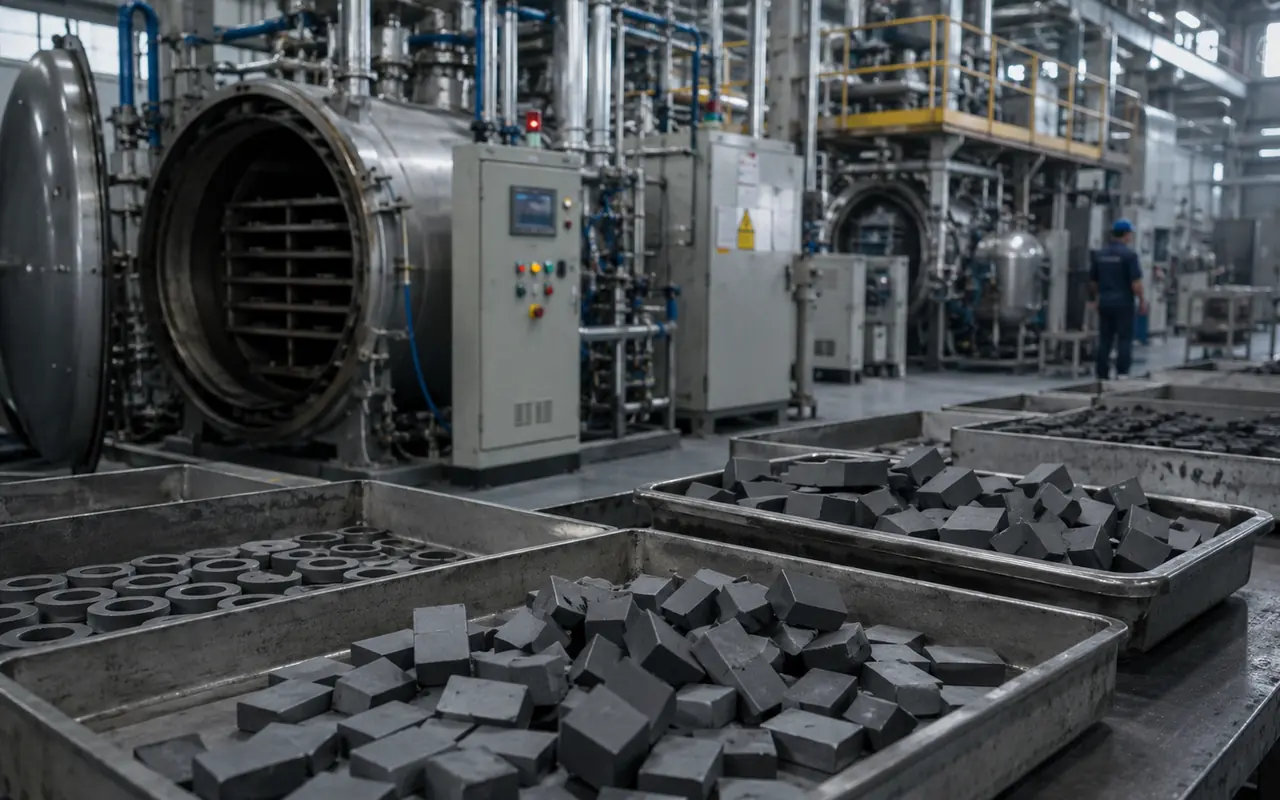
The Rare-Earth Chokehold
America squeezed China's chips; China squeezed the world's rare earths. Case-by-case licensing now reaches Taiwan's jugular.
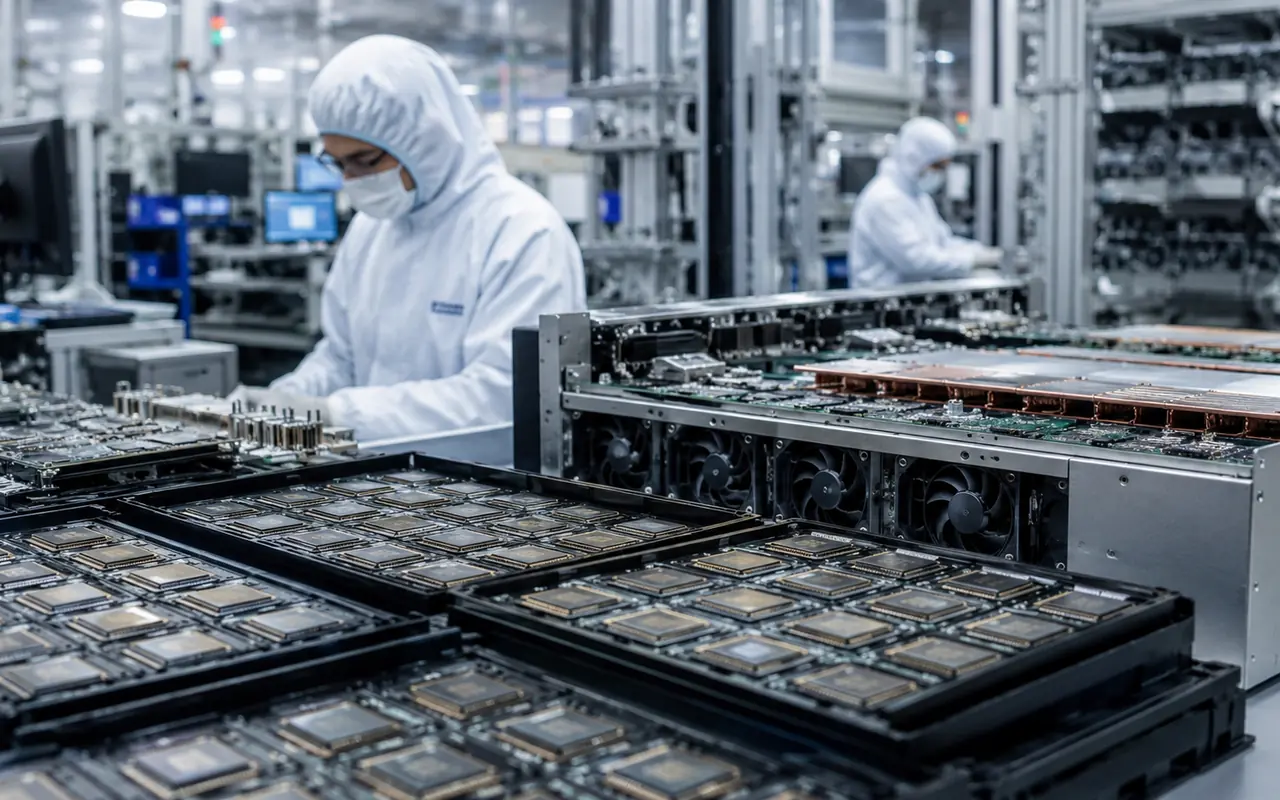
The Frontier Is Not the Finish
The East-West AI gap has closed to single digits. This is where two strategies diverge — closed frontier vs. open weights — and where the money flows: straight to Taiwan.