The Frontier Is Not the Finish
The East-West AI gap has closed to single digits. This is where two strategies diverge — closed frontier vs. open weights — and where the money flows: straight to Taiwan.
Article contents01 / 08
- As of mid-2026, China's frontier models trail the U.S. by roughly 7 months on average, with the coding gap effectively closed. But this is not a generational gap — it is a strategic fork: the West pursues closed frontier + high capital; China pursues open-weight + extreme cost efficiency.
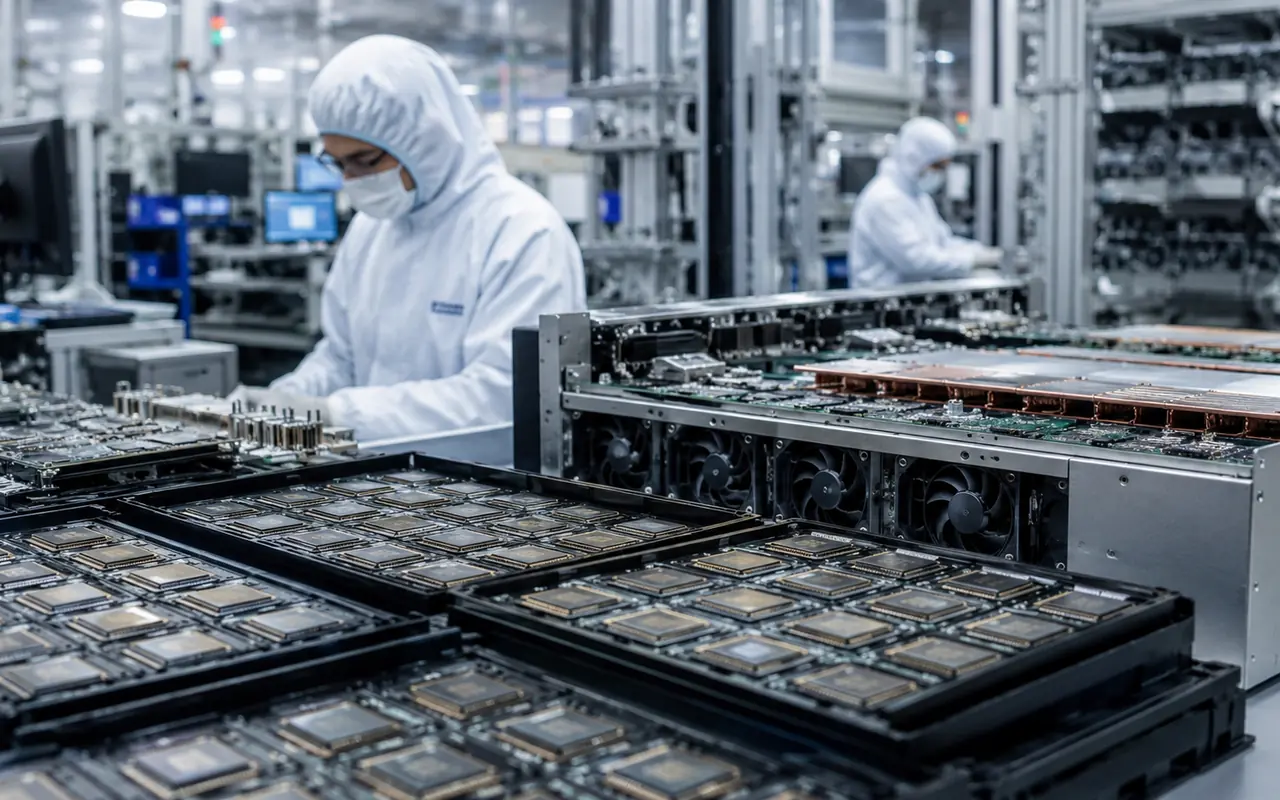
- The real battleground is not the model but chips and capital flows. Over 90% of the world's most advanced chips and the critical advanced packaging are made in Taiwan — channeling global AI capital measured in hundreds of billions of dollars to this island.
- MIT research shows 95% of enterprise AI pilots see no measurable P&L impact; the divide hinges on implementation method, not model quality. For Taiwan's SMEs, the pragmatic path is not building engines — it's building what only you can assemble.
The numbers do not lie, but they mislead if read in isolation. Epoch AI's Capability Index shows that as of mid-2026, China's frontier models trail their American counterparts by roughly seven months on average [1]. Seven months, in an industry that once measured its generational gaps in years. That number has triggered two opposite reactions: alarm in Washington ("the gap is closing!") and triumphalism in Beijing ("we have caught up!"). Both miss the more important story. The gap closing is the surface; the strategic divergence underneath is the substance.
Gap Closing, Paths Diverging
Seven months is a meaningful lag, but it is not a generational gap. More telling than the number is what produced it: four Chinese labs — DeepSeek, Kimi, Qwen, and Hunyuan — released major frontier-class models within a span of four weeks in early 2026, each competitive with or surpassing the previous Western benchmark on at least one dimension [3]. In coding benchmarks, the gap has effectively closed.
But convergence in benchmark scores masks a fundamental strategic fork. The West — led by OpenAI, Google, and Anthropic — pursues a closed-frontier model: proprietary weights, massive capital expenditure, subscription revenue, and tight control over the most capable systems. China is pursuing something structurally different: open-weight models released publicly, engineered for extreme cost efficiency, designed to maximize adoption across the widest possible ecosystem [5]. Brookings puts it cleanly: the West holds the closed frontier and the revenue model; China holds the open ecosystem and the adoption curve [5]. Convergence is the surface, divergence is the substance: America capitalizes the frontier; China commoditizes it.
The Truth About "Cheap": The $600M Myth, Trimmed
No story defined early 2026's AI narrative more than DeepSeek's cost claim. The model's technical report, later published in Nature, stated that the final training run for DeepSeek-R1 cost approximately $294,000 [6]. The number ricocheted around the world: China had built a frontier model for the price of a house in San Francisco.
The figure is accurate but radically incomplete. RAND analysts dissected the claim and found that $294,000 covers only the final training run — a single optimization pass on an already-prepared model [7]. It excludes the full pre-training compute, the failed experiments, the infrastructure buildout, the research salaries, and the years of iterative development that preceded it. RAND's full-stack estimate puts the real figure somewhere north of $1.3 billion [7]. The lesson is not that China did not achieve impressive efficiency — it did. The lesson is that fact and narrative can differ by three orders of magnitude when incentives to simplify are high. Rigorous analysis requires reading past the headline.
The Real Battleground: The Wall Called Chips
Model weights can be distilled. Architectures can be reverse-engineered. Training recipes can be published in open-source papers. But chips cannot be downloaded.
U.S. export controls, extended and tightened in late 2024 and 2025, have specifically targeted high-bandwidth memory (HBM) — the memory architecture that makes large-model training and inference economical at scale [8]. Huawei's Ascend series, China's flagship domestic AI chip, remains constrained to roughly 7nm-equivalent process technology. Georgetown's CSET estimates that Huawei cannot close the performance gap with NVIDIA's H200 for at least two more years under current export control regimes [9]. More than 90% of the world's most advanced logic chips — the kind needed to train and run frontier models at scale — are fabricated exclusively in Taiwan [10].
Models can be distilled, open-sourced. Chips cannot. That years-long gap is the true timer of this competition — and the timer is in Taiwan's hands.
The Money Is Flooding In — Straight to Taiwan
The practical consequence of this chip dependency is a capital flow of historic scale. IDC tracked AI infrastructure spending hitting $90 billion in Q4 2025 alone; the firm projects $487 billion for full-year 2026 and forecasts the annual figure will exceed $1 trillion by 2029 [11]. Amazon, Microsoft, Google, and Meta have collectively committed $635–665 billion in AI-related capital expenditure for 2026, the vast majority directed at data centers and the chips that fill them [12].
Follow that money and it leads to Taiwan. NVIDIA sources more than 90% of its most advanced chips from TSMC; TSMC's high-performance computing segment — the AI-facing business — accounted for 58% of total annual revenue in 2025 [7]. TSMC's advanced packaging technology, CoWoS, routes more than half its capacity to a single customer: NVIDIA [6]. In Q4 2025, TSMC reported revenue of $33.7 billion, up more than 20% year-on-year. For 2026, the company has committed $56 billion in capital expenditure, with 70–80% allocated to advanced processes [6]. The AI capital wave is not abstract. It is landing, physically and financially, on one island in the western Pacific.
The Section to Pin on Your Wall: The 95% Divide
Here is the number that deserves the most attention from anyone running a business: 95%.
MIT's NANDA lab surveyed 300 to 400 enterprises actively running generative AI pilots and found that 95% could demonstrate no measurable impact on profit and loss [13]. Zero ROI — not negative, just invisible. The remaining 5% created measurable value ranging from millions to tens of millions of dollars. The difference between the two groups was not access to better models, not regulatory environment, not industry sector. It was implementation method [13].
Gartner adds a cautionary footnote: it estimates 40% of agentic AI projects currently in development will be cancelled by 2027, not because the technology failed but because the organizational integration did not exist to absorb it [14]. And yet: the same research shows that enterprises in the "method-right" category generate $3.70 in measurable value for every $1 invested in AI — a return profile that rivals any capital allocation in modern business.
AI doesn't lack capability; it lacks methods to turn capability into P&L. For Taiwan's industry, that sentence is worth more than any model ranking.
The Search Shift: When "Being Cited" Replaces "Being Found"
AI is not just changing how products are built — it is changing how customers find them. AI-referred traffic across tracked websites surged 527% in the first five months of 2025 [15]. Gartner projects traditional search engine volume will decline 25% by 2026 as users shift queries to conversational AI systems [15]. For businesses that built their digital presence around search engine optimization, this is a structural disruption, not a cyclical dip.
The conversion numbers make the shift even starker. Analysis of ChatGPT-referred traffic found a visitor-to-signup conversion rate of 15.9%, compared to 1.76% for organic search traffic — a difference of nearly 9x [15]. Ahrefs' research found AI search accounts for only 0.5% of total site visits but drives 12.1% of signup conversions, implying roughly 24x the efficiency of organic search for high-intent actions [15]. A new discipline is emerging in response: Generative Engine Optimization (GEO), the practice of structuring content and authority signals so that AI systems cite your business when answering relevant queries [15]. The brands that figure this out early will hold positions that are structurally difficult to dislodge, because AI citation patterns tend to be self-reinforcing.
Where Taiwan Stands: Pivot Point and Single Pillar
Taiwan sits at the physical endpoint of the global AI capital flow. Every dollar that flows from hyperscaler capex budgets into GPU clusters eventually passes through TSMC's fabs and advanced packaging lines. That position is Taiwan's greatest structural advantage — and its greatest structural concentration risk.
The same logic that makes Taiwan indispensable also makes it a single point of failure. If the AI infrastructure investment cycle proves to be a bubble — if the $1 trillion annual projection by 2029 proves to be peak-cycle euphoria rather than a durable baseline — Taiwan's semiconductor sector will absorb the correction with a severity that is difficult to cushion. The "silicon shield" debate — whether global dependence on Taiwan's chips provides implicit geopolitical protection — has a mirror image: the deeper the dependence, the more consequential any disruption, whether from geopolitics, natural disaster, or demand collapse.
Three Stances: How Taiwan Should Play This Hand
Our team has converged on three positional stances for navigating this juncture (decision-oriented; not investment advice).
For the state, the mandate is to guard the physical load-bearing wall: defend advanced node capacity, CoWoS advanced packaging, semiconductor talent pipelines, and the energy infrastructure that keeps the fabs running. Monitor chip export controls and AI capital expenditure trends as leading national-security indicators — shifts in either will arrive in Taiwan's economic data before they appear in policy headlines.
For industry associations, the primary task is pushing members from the 95% to the 5% — and the lever is method, not models. Help member companies build AI implementation competencies: workflow integration, data readiness, change management, outcome measurement. Simultaneously, help brand-facing members understand GEO and begin building the citation authority that will determine discoverability in the AI-search era.
Don't compete with engine makers to build engines — go build what only you can assemble.
The real moat for Taiwan's enterprises is not in building a better language model — it is in the application layer: proprietary operational data accumulated over decades, workflow integration that reflects deep domain knowledge, customer relationships that no model can replicate. Consider a Taichung machine tool manufacturer: the competitive advantage is not training a proprietary LLM from scratch. It is plugging AI into quoting workflows, production scheduling, and fault diagnosis using the machining parameters and process knowledge built up over thirty years of manufacturing. That knowledge, embedded in AI-augmented workflows, is irreplaceable. The engine can be rented. The factory floor cannot.
Sources
- Epoch AI — US vs China Capabilities Index
- Digital Applied — Open-weight vs closed-source models Q2 2026
- China Sphere — Capability gap Q2 2026 update
- LLM-Stats — AI trends (OpenRouter traffic)
- Brookings — Competing AI strategies for US and China
- CNN — DeepSeek training cost $294K (Nature)
- RAND — What DeepSeek Really Changes About AI Competition
- CSIS — Updated export controls (HBM restrictions)
- Georgetown CSET — Huawei's AI chip tests export controls
- CFR — China's AI chip deficit
- IDC — AI infrastructure spending ($90B Q4 2025, $1T+ by 2029)
- tech-insider — Big-4 cloud AI capex 2026 ($635–665B)
- MIT NANDA "GenAI Divide" — 95% of pilots fail to deliver ROI
- tech-insider — Agentic AI enterprise market 2026 (Gartner)
- Search Engine Land — Generative Engine Optimization (GEO)

Taiwan's Two Faces
As global supply chains and geopolitics reshape competition and pressure, Taiwan stands at the center of opportunity — and on the front line of risk.
The Rare-Earth Chokehold
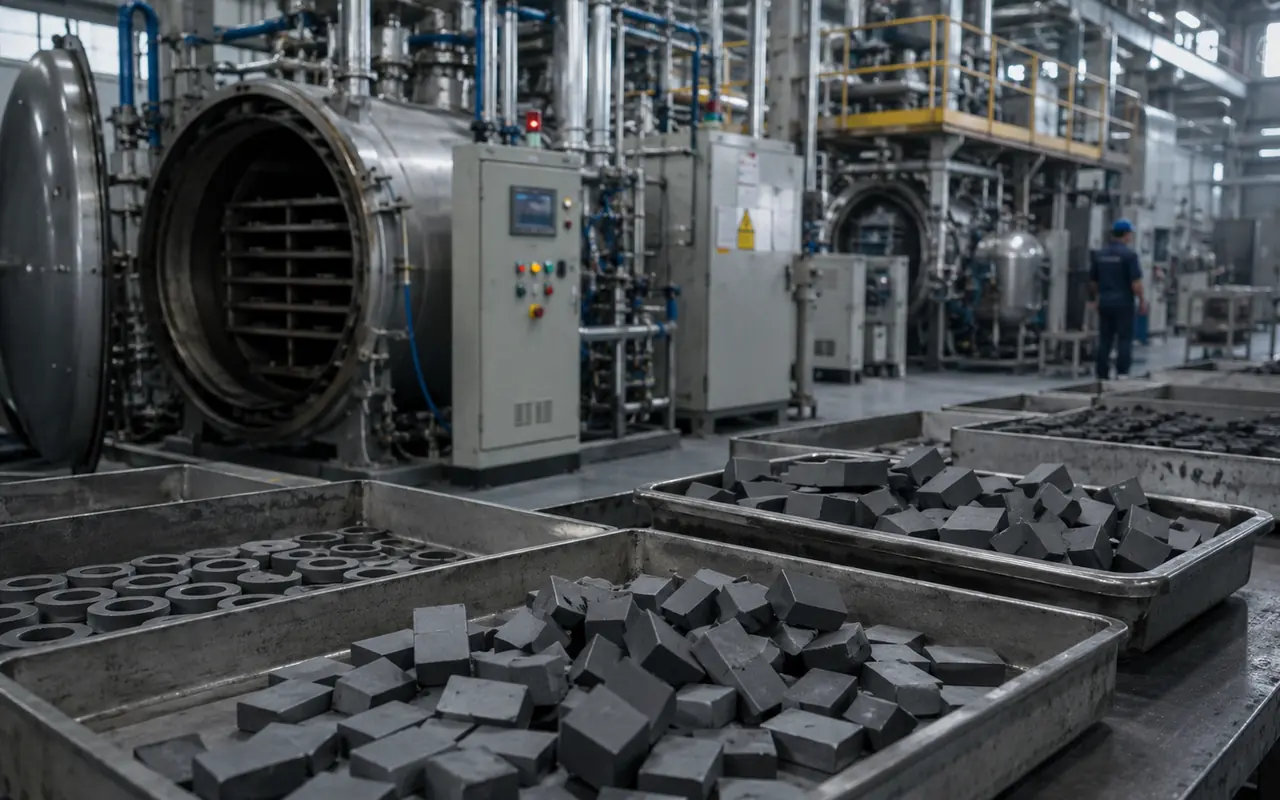
America squeezed China's chips; China squeezed the world's rare earths. Case-by-case licensing now reaches Taiwan's jugular.